


Winter is often seen as the quieter part of the farming calendar, but for those of us in agronomy, it is anything but idle. While the pace in the field may slow, the work behind the scenes rarely does. In many ways, the winter months are some of the most important of the year – giving us time to reflect on the past season, review what worked, learn from what didn’t, and plan properly for the year ahead.
For Indigro, this period has always been about more than just preparing crop plans. It is an opportunity to bring the team together, challenge our thinking, look at new research, and make sure we are ready to support farmers as we head into another season.
Time to step back and review
After harvest, there is always a natural pause before the next cycle begins. That pause gives us the chance to look closely at the previous year’s results – from crop performance and nutrition programmes to fungicide strategies, soil health and overall cost of production.
No two seasons are ever the same, but the last few years in particular have shown how important it is to stay adaptable. Weather patterns, input prices, policy changes and market pressures all continue to shift, so taking time to properly analyse what has happened is essential if we want to make better decisions in the future.
Bringing the team together
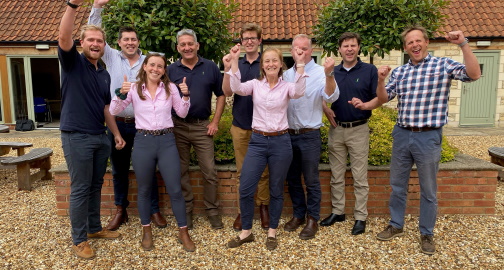
Each February, the Indigro team holds an internal winter conference, and this year was no exception. We spent a couple of days together in the Cotswolds, taking time away from day-to-day calls and field visits to focus on the bigger picture.
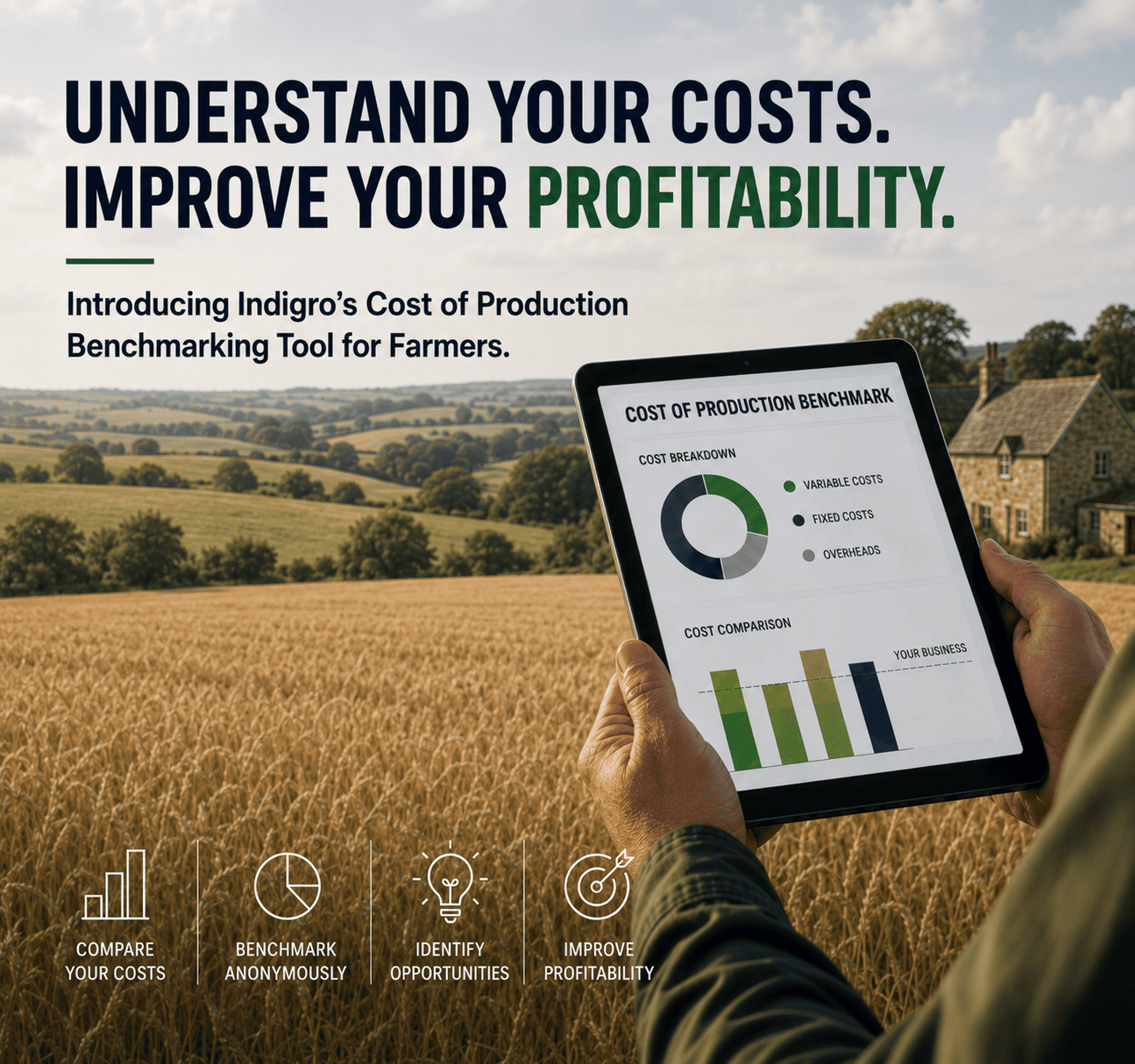
These meetings are always one of the most valuable parts of the year. We covered everything from fungicide planning and nitrogen strategies to goal setting for the season ahead. There were also sessions looking at nitrogen break-even calculations, discussions around regenerative farming, planning for the events we’ll be attending this year and plenty of time spent developing ideas for new tools we are building – including a platform focused on understanding and managing cost of production more accurately.
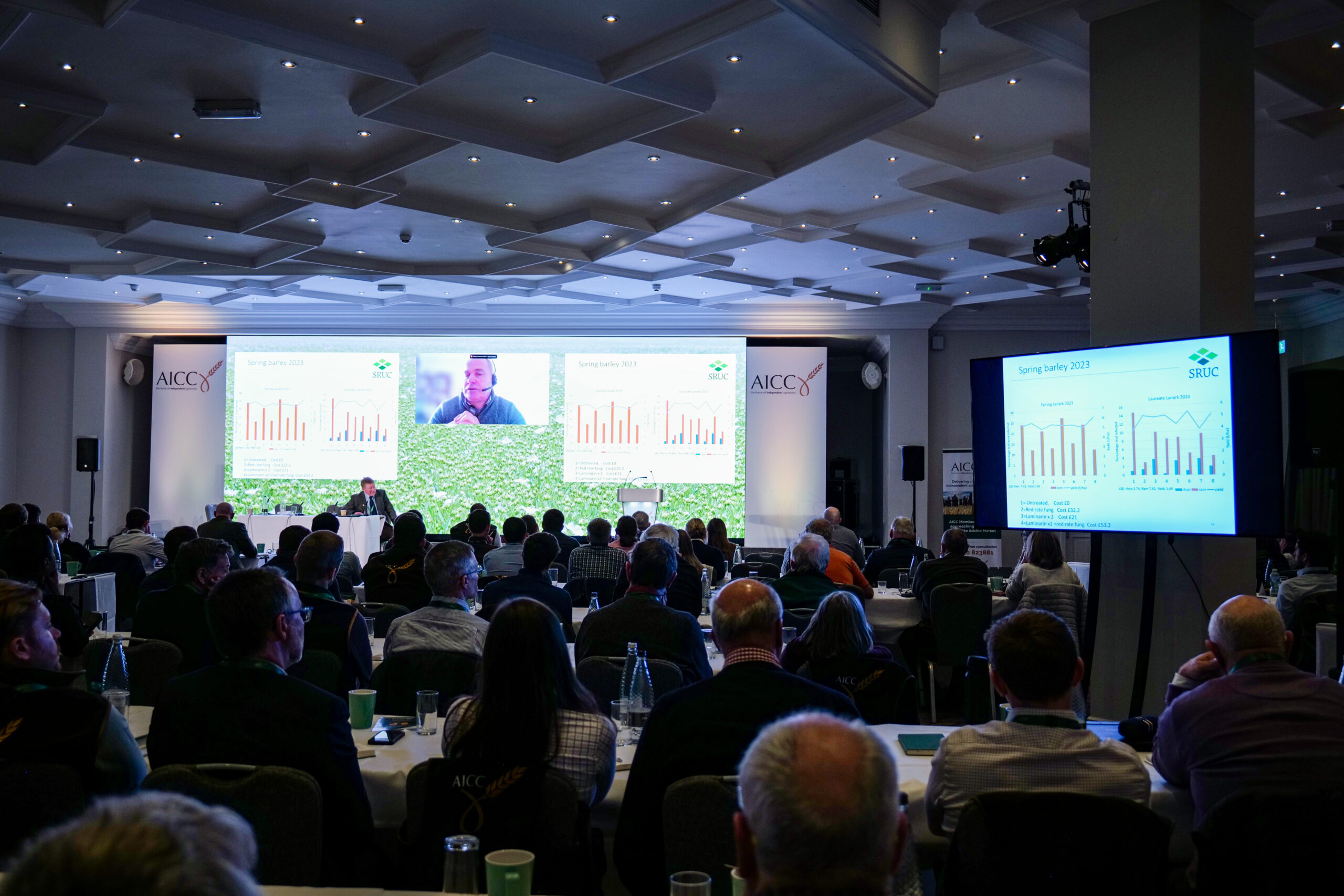
Over the winter months, the team also attended a number of industry events, including the AICC Conference, BASE UK Conference, Maize Growers Association Conference and BeetTech Conference. These meetings are always a good opportunity to hear the latest research, exchange ideas with other agronomists and growers, and make sure the advice we give is based on the most up-to-date thinking across the industry.
Just as important as the technical discussions is the chance to talk openly as a team. Agronomy can be a solitary job at times, so having everyone in one place to share experiences from the past season and talk about what lies ahead makes a real difference.
Sharing knowledge with farmers
Winter is also a good time to get off farm and talk to farmers in a different setting. In early March we hosted a farmer event at Bragborough Hall Business Centre in Daventry focused on regenerative agriculture and crop nutrition management, with over 30 farmers attending.
Sessions like this are always valuable because the conversation goes both ways. Joe, our lead soils expert and agronomist, spoke about soil health, nutrient efficiency and the practical realities of regenerative systems, but the discussion that followed was just as important. Farmers want solutions that work in the real world, and those conversations help shape the advice we give.
There is a growing appetite to look at different ways of farming, but also a clear need to make sure those changes stack up agronomically and financially.
Keeping an eye on trials and long-term work
Alongside meetings and events, winter also gives us time to review ongoing trial work. The team has been visiting the winter wheat variety trial site near Kettering to check progress and start shaping plans not just for this year, but for the seasons ahead.
Trial work is a big part of what we do. It allows us to test ideas properly, look at nutrition and biological approaches in detail, and build evidence that we can stand behind when advising farmers. As farming systems continue to change, having reliable data becomes more important every year.
Looking ahead to the 2026 season
With spring here, the focus now shifts from planning to action. Crop programmes are in place and starting to be applied, fertiliser strategies are being finalised and are well underway, and attention turns back to the field.
We are also looking forward to getting out and meeting farmers throughout the year, with plans to attend both Groundswell and Cereals at Diddly Squat Farm this summer. Events like these are always a good opportunity to talk face-to-face, share ideas and hear what farmers are seeing on their own land.
Every season brings new challenges, but it also brings new opportunities to improve how we farm. If winter is the time for thinking, spring is the time to put those plans into practice – and as a team, we are ready to start the 2026 season with real momentum.